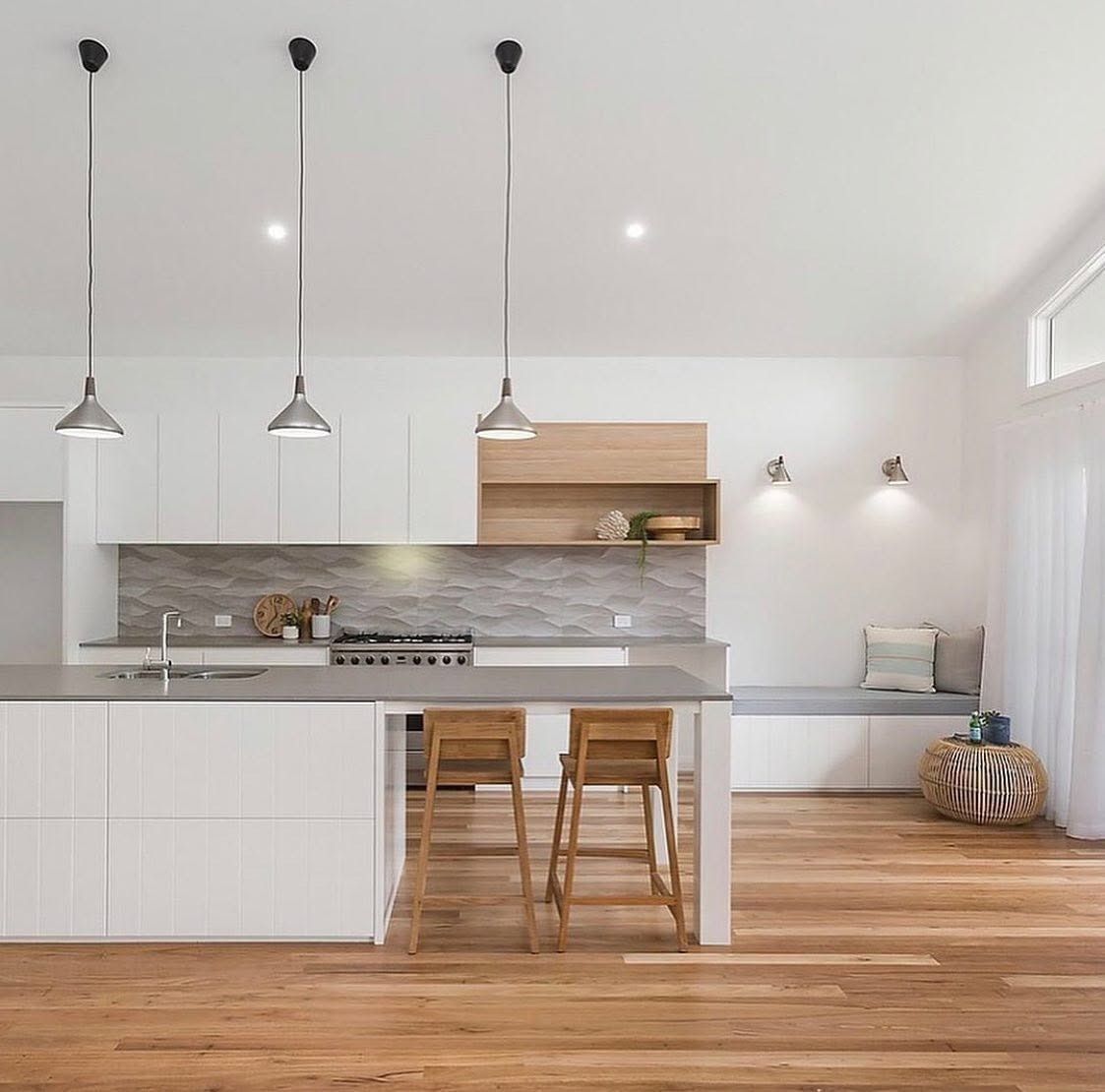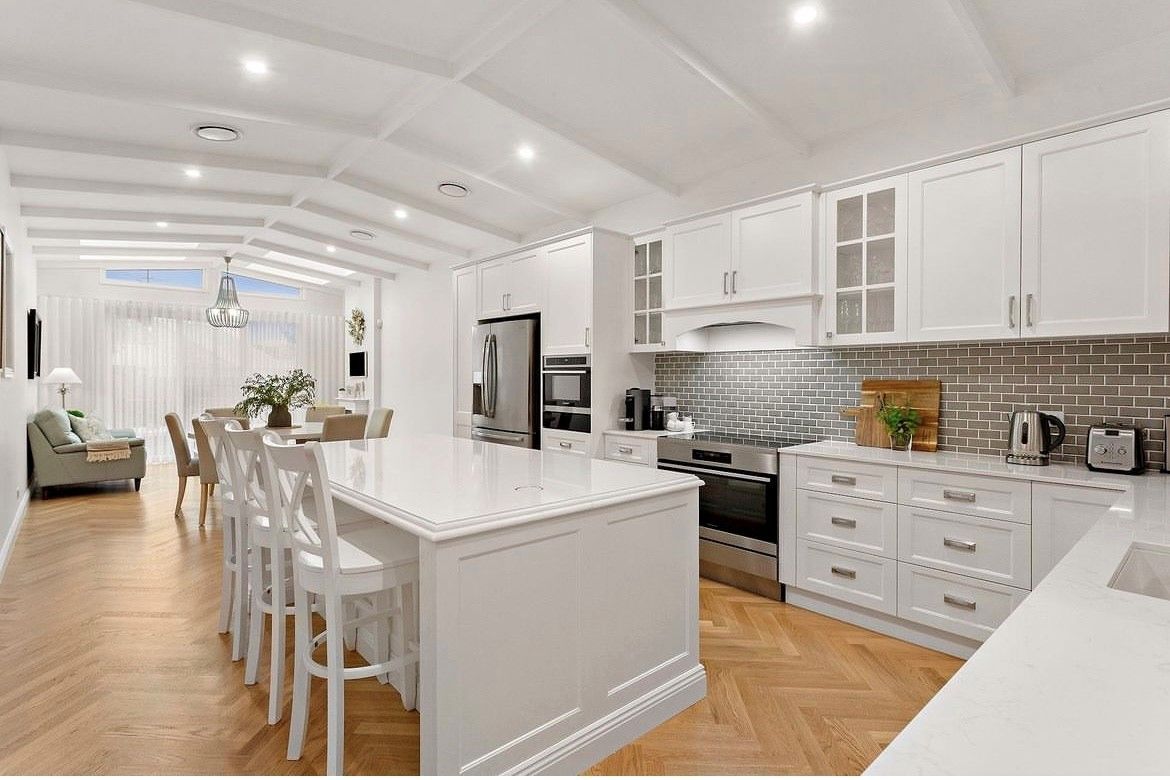
Open Plan Kitchen Renovations In Newcastle: Is Removing A Wall Worth It?
If you own an older home in Newcastle, a brick veneer from the 1970s, a fibro cottage from the 1980s or a double brick from the 1990s, there is a reasonable chance your kitchen is a separate room. Closed off from the dining area, cut out from natural light and disconnected from wherever the rest of the family happens to be. It is one of the most common complaints we hear from homeowners considering kitchen renovations in Newcastle, and opening up that wall to create an open plan living space is often the single change that transforms how a home feels and functions. But it is not as simple as knocking down a wall on a Saturday afternoon.
Before you commit, it pays to understand what is actually involved structurally, legally and financially.
Load-Bearing vs Non-Load-Bearing: Why It Matters First
The first question any builder or engineer will ask is whether the wall you want to remove is load-bearing, as this single distinction determines the cost, engineering, timeline and approvals for the entire project. The challenge is that you cannot always tell from looking at a wall whether it is structural or not. The most common indicators include:
- Walls running perpendicular to floor or ceiling joists are more likely to be load-bearing.
- Walls above a slab edge or footing line are often load-bearing, particularly in the brick veneer and double brick homes common in Newcastle.
- Walls beneath a ridge line, roof valley or aligned with a wall above are strong candidates for load-bearing status.
- Walls in fibro or timber-framed homes are not always load-bearing, but should never be assumed non-structural without a professional assessment.
The only reliable way to confirm whether a wall is load-bearing is to have a structural engineer or experienced builder assess the framing. If it is not load-bearing, the removal is typically simpler, less costly and unlikely to require engineering or certification. If it is, the scope and budget change considerably, which is exactly why this assessment comes first.
What Happens When a Load-Bearing Wall Comes Out
If the wall is load-bearing, it does not mean you cannot remove it. It means the load it was carrying needs to be redirected through a steel or engineered timber beam, supported by posts or columns that transfer that load down to the footings. In many older Newcastle homes this is entirely achievable, but it adds cost and complexity to the project. The process typically involves the following steps:
- A structural engineer assesses the structure and specifies the beam size, post positions and footing requirements for the new opening.
- A licensed builder props the structure before any framing is removed to prevent movement during demolition.
- The beam is installed and fully supported before props are removed, with all connections made to the engineer's specification.
- A final inspection confirms compliance before finishing trades proceed.
The engineer's involvement is a legal requirement under the National Construction Code for any structural alteration, and skipping it creates liability issues that can surface when you sell.
Development Applications & When You Need Council Approval in NSW
Not every wall removal requires a Development Application. Under NSW planning law, many internal alterations qualify as Exempt or Complying Development and can proceed without a full DA provided they meet specific criteria.
- Exempt Development covers minor works that do not affect structural integrity and meet council's criteria under the relevant State Environmental Planning Policy.
- Complying Development covers structural alterations where eligibility criteria around zoning, heritage and overlays are met. It is approved by a private certifier and is generally faster than a full DA.
- A full DA is required when complying development criteria are not met, which is common for heritage-listed homes. Inner Newcastle suburbs with older housing stock frequently trigger heritage considerations.
- A Construction Certificate or CDC is required before work begins, and an Occupation Certificate is required on completion.
Understanding which pathway applies to your property before you start planning is essential. A certifier, town planner or experienced renovation company can advise based on your specific address and the scope of work.
Ventilation & Rangehood Planning in an Open Plan Kitchen
One of the most overlooked consequences of opening up a kitchen is ventilation. A closed kitchen can be directly exhausted to outside; open it to a dining or living area and the challenge becomes considerably more complex. Rangehood selection and ducting design becomes critical when a kitchen opens to the rest of the home. The key considerations are:
- Ducted rangehoods that exhaust outside are far more effective than recirculating models in an open plan space.
- Duct runs need to be planned before joinery is installed, as they may travel through cabinetry, ceiling cavities or external walls.
- Rangehood capacity must be matched to the combined open plan space, not just the kitchen footprint, a common and costly oversight.
- Island benches require ceiling-mounted or island-specific rangehoods with longer duct runs and careful placement to avoid airflow dead zones.
Getting ventilation right at the planning stage avoids costly retrofitting later and makes a significant difference to how liveable the open plan space is on a day-to-day basis.
What Does It Actually Cost?
The total cost depends on several variables, but understanding the components helps you budget realistically. The main cost items to factor in are:
- Structural engineering fees typically range from $1,000 to $3,000 depending on complexity.
- Builder costs for propping, demolition, beam installation and making good typically range from $5,000 to $15,000, with double brick at the higher end.
- Certification fees including the CDC or DA, construction certificate and inspections typically add $1,500 to $4,000.
- A mid-range full kitchen renovation in Newcastle including joinery, benchtops, appliances and trade work typically sits between $35,000 and $65,000.
These costs are not additive in every case, as some overlap depending on how your builder and kitchen company are contracted, but they give a realistic picture of what a complete project involves financially.
The Lifestyle & Resale Upside
The return in both lifestyle and property value tends to justify the investment, and the case is particularly strong in Newcastle where older housing stock dominates many suburbs. The reasons are well established:
- Open plan living is consistently rated among the most desired features by buyers in the Newcastle and Hunter market.
- Removing a wall creates connection between kitchen, dining and living, improving natural light, entertaining and everyday family flow without adding floor area.
- Older homes in suburbs like Hamilton, Adamstown and Mayfield with closed layouts typically present below renovated open plan equivalents, making the financial case compelling.
- A well-executed renovation updates surrounding finishes including flooring, ceiling and lighting, so the visual improvement extends well beyond the kitchen itself.
None of this guarantees a specific return, but the demand-side case for open plan living in Newcastle's owner-occupier market is strong.
The Trades Involved & Why Coordination Matters
A wall removal and open plan kitchen renovation involves more trades than a standard kitchen replacement, and poor coordination is one of the most common reasons projects run over time and over budget. The key trades involved are:
- A structural engineer provides the specification before work begins and may be required to inspect the completed work before certification.
- A licensed builder handles demolition, propping, beam installation and making good of all affected surfaces.
- Electricians and plumbers relocate services in the removed wall and update the kitchen layout to suit the new configuration.
- The kitchen designer needs to be involved from the planning stage, not after structural work is done, so joinery and ducting are designed around the new space from the outset.
Having a single point of contact who manages the builder, engineer and kitchen trades removes the coordination burden from the homeowner and significantly reduces the risk of costly rework.
Is It Worth It for Your Newcastle Home?
For most owners of older Newcastle homes with closed-off kitchens, the answer is yes, provided the project is planned properly and the structural, legal and design elements are handled in the right sequence. The lifestyle improvement is immediate and the resale upside is real.
At Inovative Interiors, we manage kitchen renovations in Newcastle from the initial design concept through to the final installation, coordinating the structural, certification and cabinetry trades so the project runs smoothly from start to finish. If you are considering opening up your kitchen and want to understand what is involved for your specific home, get in touch with our team to arrange a consultation.